
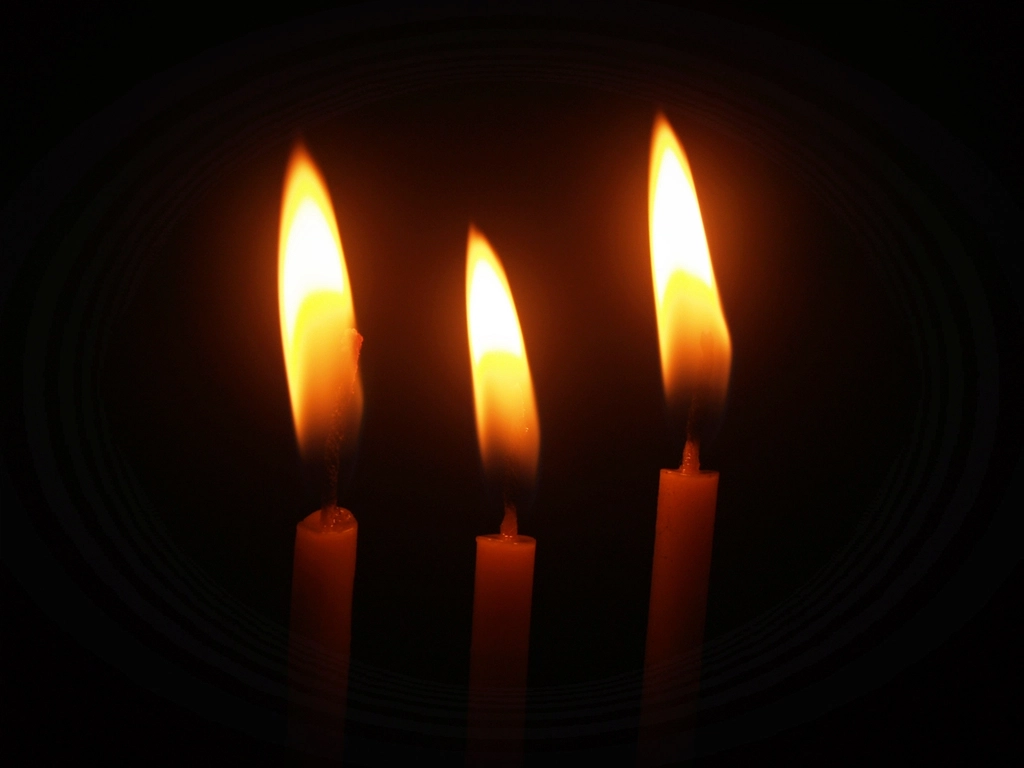

“A father to the fatherless, a defender of widows, is God in his holy dwelling.”
Psalm 68:5
I have been sitting with this one verse for a while now, turning it over slowly, the way you hold a photograph up to the light. Of all the names and titles Scripture gives to God — King, Shepherd, Rock, Refuge — this one stops me. Father to the fatherless. Not father in general, not father at a distance, but Father precisely where a father is missing. God introduces Himself by the empty place He intends to fill.
That tells me something about His heart before it tells me anything about my need. He does not wait for us to come to Him complete. He comes looking for the ones who are missing something — missing someone — and He says, that is exactly where I will be found.
The empty chair
Fatherlessness is not always a funeral or an empty house. Sometimes a father is absent because he has gone. Sometimes he was never really there, even when he was in the room — present in body, but silent, distant, or unable to give the blessing every child longs to hear: You are mine. You are loved. I am proud of you.
And sometimes the ache is quieter still. It is the grown woman, the grown man, who has built a good life and yet still feels a small, unprotected place inside — the place that wanted a father’s covering, a father’s voice, a father’s arms to run to when the world was too big. If you know that ache, I want you to hear this first: it is not a sign that you are broken beyond repair. It is a sign that you were made for a Father. We all were. The longing itself is the clue.
The question I have been searching through, in this season, is not whether that longing can be met. It is whether we will let the One who made us be the One who meets it.
Abba is not a distant title
“Father” can still sound formal, even a little far away. But Yeshua did not leave us with a formal word. In the garden, in His darkest hour, He cried out, “Abba, Father” (Mark 14:36). Abba is the word of a child — close, trusting, unafraid. It is less like addressing a throne and more like calling out in the dark, knowing someone who loves you will answer.
“The Spirit you received does not make you slaves, so that you live in fear again; rather, the Spirit you received brought about your adoption to sonship. And by him we cry, ‘Abba, Father.’”
Romans 8:15
Notice that Paul does not say we should try to feel like children of God. He says the Spirit Himself puts this cry in us. When I cannot find the words, when prayer feels like oxygen I can barely breathe in, the Spirit in me still knows the way home. He still calls Him Abba — even on my behalf, even through tears.
He steps into the empty place Himself
What moves me most in Psalm 68 is that God does not delegate this. He does not send a substitute, or offer the fatherless a programme, or simply promise that things will one day make sense. From His holy dwelling — from heaven itself — He is a father to the fatherless. The highest place bends toward the loneliest place.
And the very next verse tells us what He does with the lonely: “God sets the lonely in families” (Psalm 68:6). He does not only comfort us in our aloneness; He places us. He gathers. He gives belonging, not just sympathy. If you have ever been surprised by the people God has put around you — the ones who became family when you least expected it — you have tasted this verse.
My own empty chair has a date on it. I was twelve when my father left — he walked away from my mum and me, and the years that followed were rough. There were days when his absence felt like the whole story. But it was not the whole story. Abba was there, in the middle of the rough years, in the places no one else could reach. Everything I am today is His blessing. He did not simply fill the gap my father left — He became the Father I never had, and He has been fathering me ever since.
I think of how He has done this in my own journey, in season after season, in place after place: never once leaving me to carry the orphan-hearted moments alone, even when I did not recognise His hand until much later. Looking back is often where we see Him most clearly. The Father was there in the chapters where we felt most fatherless. That is the story hindsight tells, again and again.
We are not left as orphans
On the night before the cross, Yeshua made His friends a promise that I keep returning to: “I will not leave you as orphans; I will come to you” (John 14:18). He knew they were about to feel exactly that — bereft, scattered, unsure who they belonged to now. And His answer was not only that He would return one day, but that He would come to them, by His Spirit, in the meantime.
This is the difference between comfort and adoption. Comfort says, I am sorry you are alone. Adoption says, you are not alone, and you never will be again — you have a name, a home, an inheritance, a Father. Through Yeshua we are not God’s charity cases. We are His children. “As a father has compassion on his children, so the LORD has compassion on those who fear him” (Psalm 103:13). Compassion is His instinct toward us. Not reluctance. Not tolerance. Compassion.
What this Father is like
Perhaps the hardest part, for a fatherless heart, is learning to trust what kind of Father He is — because every earthly picture we have is imperfect, and some are painful. So let Scripture repaint the picture, slowly:
- He protects. He is a defender — of widows, of the fatherless, of those who cannot defend themselves. What no one stood up to shield, He shields.
- He provides. Yeshua reminds us that if earthly fathers know how to give good gifts to their children, how much more will our Father in heaven give good gifts to those who ask Him. We do not have to beg a reluctant God.
- He draws near. He does not love us from His holy dwelling at a safe distance. In Yeshua, the Father came close enough to be touched, to weep with us, to carry our grief Himself.
- He delights in us. He does not merely put up with His children. He rejoices over them. Being His is not a duty He performs; it is a joy He declares.
If your picture of a father has made it hard to run to God, I understand. But please do not judge Abba by the fathers who failed. Let Abba Himself — patiently, through His Word and His Spirit — show you who He has always been.
A prayer for the fatherless heart
Abba, Father,
For the one reading this who knows the empty chair, the unanswered longing, the blessing that was never spoken — come and be the Father You promised to be. Step into the place that has been empty for so long, and fill it with Yourself.
Teach our hearts to cry Abba when fear tells us to stay silent. Set the lonely in families. Heal what absence wounded, and let us hear, deep in our spirit, the words every child longs for: You are mine. You are loved. I am here, and I am not leaving.
Thank You that in Yeshua we are not orphans, not strangers, not outsiders looking in — but children, brought home. We rest in Your fatherhood today.
In Yeshua’ name, Amen.
If this reflection blessed you, I would love to hear from you in the comments — when has Abba met you in a fatherless place?
Scripture quotations are from the New International Version (NIV).

Leave a Reply